
EU PVSEC: IS MODULE MANUFACTURING IN EMERGING MARKETS ON THE MOVE?
The globalisation of end market demand for PV as the technology becomes increasingly cost competitive has been one of the significant developments over the last few years, despite the industry suffering profitless prosperity and consolidation.
Emerging markets in Africa, Latin America and Southeast Asia have held the promise of supporting industry growth and are finally delivering on that promise, regardless of which market research data you chose to follow.
However, two contradictory views exist over whether the globalisation of the PV industry will lead to further module manufacturing consolidation to Asia, primarily China, due to the low costs, or whether emerging markets will experience the development of local manufacturing to meet local demand as it reaches scale.
One of the most significant emerging markets is Latin America, notably Chile and Brazil, based on both PV project pipeline scale and government support to develop renewable energy resources to meet electricity demand.
Of course as in the case of Brazil, local content rules with government bids could spur local manufacture.
According to a recent report from IHS, Brazil is rising rapidly in the ‘Attractiveness Rankings’ as the government plans new bidding rounds for PV projects, mostly utility-scale projects being awarded in national and regional auctions.
This has led the market research firm to raise its demand forecast for the country and expect PV installations to reach 39MW in 2014, yet expand to 1.2GW by the end of 2016.
However, Chile has long been a seen as a major emerging market. IHS also said recently that PV project pipeline stood at around 9GW, based mainly on government approval of projects. Around 100MW had been installed by the end of 2013, with a further 600MW currently under construction in the country.
On the surface it would seem that the expected increase in PV demand to the gigawatt level on an annual basis makes both countries highly attractive to start domestic module manufacturing. It is not clear whether IHS does a regional attractiveness score for manufacturing, but if it did then both countries should be scoring fairly highly.
Module manufacturing expansions
According to NPD Solarbuzz, ‘effective capacity’ for module manufacturing stood at around 45GW at the end of 2013. With the market research firm having a demand forecast of between 45GW and 49GW for 2014, it was not surprising that in the first quarter of the year there had been a stream of companies announcing the addition primarily module capacity.
In April, 2014 PV Tech undertook an analysis of announced capacity expansions, which primarily involved tier-one manufacturers in both c-Si and thin-film segments.
However, the first half of the year also reflected growing interest in establishing PV manufacturing in emerging markets.
As is the nature of these things, talk of establishing manufacturing may have increased but the hard evidence of actual shovels in the ground has remained elusive, not least in Latin America.
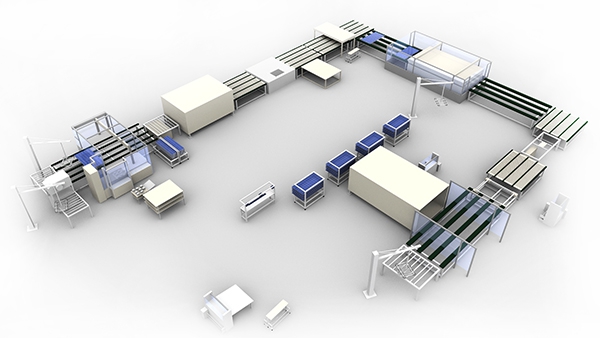
One exception has been the recent announcement of a new firm, S4 Solar do Brasil, that has teamed with equipment suppliers, Meyer Burger, Confirmware and Jinchen Machinery Co to provide a 100MW automated c-Si PV module assembly plant at a cost of around R$30 million (US$13.2 million).
The company expects production to start ramping at around 2MW per month in January 2015, increasing to 7-8MW per month in the first year of production.
However, to shine some light on potential new module manufacturing entrants in emerging markets, PV Tech took the opportunity to sit down with Inaki Legarda-Ereno, solar business director at Mondragon Assembly at the recent EU PVSEC event to get a better insight into what is really happening in the region.
Spanish firm, Mondragon Assembly, is a well established supplier of integrated automation solutions, has been active in the PV module assembly sector and has operated in Latin America for many years, notably in places such as Brazil in respect to the automotive industry.
Not surprisingly, Legarda-Ereno highlighted that doing business in emerging markets takes time. Typically several years go by before any companies are at the phase where decisions on entering the market are made. However, decisions are one thing and committing to making the capital investment and or raising the capital is another.
“The key challenge in emerging markets is simply finance,” remarked Legarda-Ereno. “This relates to the lack of penetration and acceptance of the PV sector in many of these countries.”
Legarda-Ereno noted that the PV sector in general had been challenging over the last two years due to overcapacity and lack of momentum in emerging markets.
“Until now it’s been another challenging year, but the next six months we are more confident as we expect more contracted orders,” added the Mondragon director.
Legarda-Ereno noted that it had a permanent presence in Brazil since 1997 on the back of various manufacturing industries driven by the automotive in and around Sao Paulo. Indeed, interest from industrial firms in Brazil in the PV sector was not a recent trend, according to Legarda-Ereno, having travelled a lot to the country from 2003 through 2009.
“Companies in Brazil are serious about the PV sector, but also realise it is important to get it right as well as seeing the level of government support,” added Legarda-Ereno. “Key to many in emerging markets will be having the manufacturing flexibility such as the ability to produce different sizes of modules to meet local requirements.”
The Mondragon director is optimistic that due to Brazil’s existing industrial strength and expertise local manufacturing will be established by a number of new entrants, the challenge being to predict when.
However, Legarda-Ereno did not feel that Chile would become home to PV manufacturing, despite the significant PV project pipeline, noting that Chilean authorities are more focused on electricity generation expansion than establishing a manufacturing hub for PV modules.
Legarda-Ereno also pointed to Africa as an emerging market for module production, highlighting the activities already taking place in South Africa, such as the 120MW assembly plant being established in East London.
However, he also cited Angola and Mozambique as two other African countries that could establish production, possibly in the next two years.
Legarda-Ereno is also becoming more optimistic about PV manufacturing prospects in the MENA region with countries such as Tunisia and Morocco as well as in Middle East countries such as Israel and Saudi Arabia. He also believes that India will also grow as a manufacturing hub but not surprisingly concedes this will take longer than many would expect for the existing players to add capacity.
For Mondragon patience in emerging markets has been something of a virtue but Legarda-Ereno believes the wait is almost over. He hinted that new long-awaited orders were imminent.