
How to measure photovoltaic production line performance: OEE as a key indicator for efficient and profitable manufacturing
How to measure photovoltaic production line performance: OEE as a key indicator for efficient profitable manufacturing
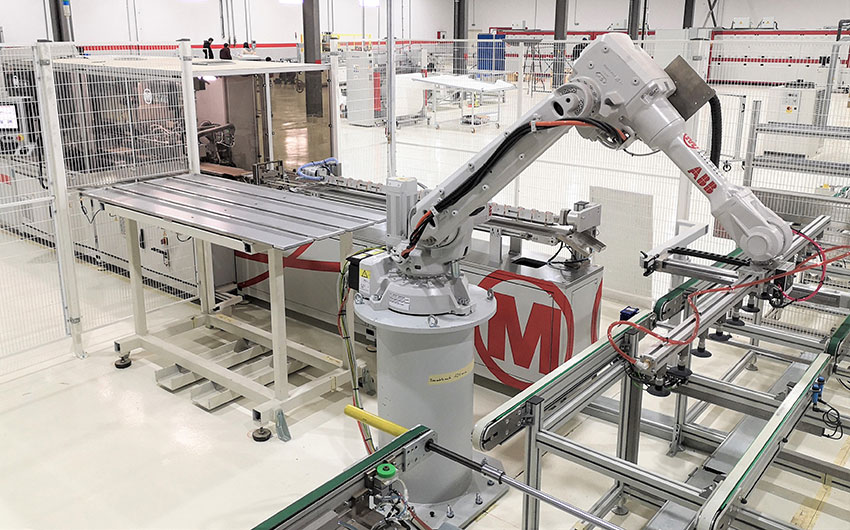
The solar industry is growing at an unprecedented pace. New technologies such as TOPCon, HJT and Back Contact, increasing cost pressure and increasingly demanding quality standards are forcing manufacturers to optimize every detail of their production processes. In this context, many manufacturers ask the same question: Is my photovoltaic production line really performing as it should?
The answer cannot be found in a single metric, but in a set of key performance indicators (KPIs) that allow manufacturers to objectively evaluate whether a solar module manufacturing line is efficient, stable and profitable. Whether you are new to solar manufacturing or already operating a production plant, measuring these KPIs will help you make better decisions and avoid hidden losses that can significantly impact your cost per watt peak (€/Wp).
This analysis is especially important in the design and operation of photovoltaic module manufacturing lines, where each KPI directly affects overall production efficiency.
What does photovoltaic production line performance really mean?
A solar production line is not competitive because of its nominal capacity, but because of its real daily performance.
The performance of a photovoltaic production line depends on its ability to:
- Identify which indicators truly influence performance
- Monitor those parameters continuously and reliably
- Optimize each of them to avoid invisible but costly losses
When a plant understands what should be measured and measures it correctly, it can identify issues that are not visible at first glance: Bottlenecks, microstoppages, quality deviations, inefficiencies that increase the cost per Wp.
Even when production appears stable, these hidden losses can significantly affect overall efficiency.
In this article we explain the KPIs that truly matter when measuring photovoltaic production line performance.
The key KPI for measuring real photovoltaic production line performance: real throughput vs. theoretical throughput
To determine whether a photovoltaic production line is performing as expected, it is not enough to look at nominal capacity or daily production. The real competitiveness of a production line is determined by the difference between what the line could theoretically produce and what it actually produces during daily operation.
This analysis is performed using a single key indicator: OEE (Overall Equipment Effectiveness), which provides the most comprehensive view of the daily performance of a solar module manufacturing plant.
The three factors that determine OEE
OEE is composed of Availability, Performance and Quality, and it allows manufacturers to understand whether a production line is operating as its nominal capacity promises or if hidden losses exist. These losses may include: downtime, microstoppages, reduced speed, and scrap.
All of these directly increase the cost per Wp.
These three factors are typically measured at the individual machine level, rather than only at the complete production line level, because this is the most effective way to detect:
- Bottlenecks
- Invisible microstoppages
- Speed losses
- Logistics or production flow impacts
- Design or flow balance misalignments
Additionally, a well-balanced production line design, with buffers at critical points and stable automation, ensures that small OEE drops in individual machines do not affect the overall line performance.
Why measure OEE per individual machine?
Although calculating a global line OEE is common practice, measuring it machine by machine provides key advantages:
- It identifies where real losses occur
- It helps anticipate bottlenecks before they affect the entire line
- It facilitates production flow balancing and buffer sizing
- It optimizes maintenance planning and scheduled stops
- It provides a reliable picture of the real production behavior
For this reason, real-time machine monitoring systems are essential. These automated systems make it possible to evaluate the behavior of each machine in real time and take the necessary actions to optimize the actual throughput of the production line.
1. Availability: ensuring machines do not stop
Availability measures the actual operating time of each machine compared to planned production time. To maintain high availability, it is essential to control:
- Preventive maintenance: Prevents unexpected failures and reduces microstoppages
- Proper production planning: Poor planning generates waiting times, blockages and imbalances between stations.
- Efficient logistics organization: If materials are missing, the line stops. If materials accumulate excessively, blockages may occur.
- Correct line design and strategic buffers: A well-designed line absorbs temporary interruptions without affecting the rest of the production process.
2. Performance: ensuring machines run in the correct speed
Performance compares the actual machine speed with its theoretical cycle time. To maximize performance, manufacturers must ensure:
- Preventive maintenance: Machines that are not in optimal condition gradually lose speed.
- Properly configured process recipes: Correct parameter configuration for laminators, soldering machines, pick & place systems or lay-up stations prevents rhythm mismatches.
- Continuous flow between stations: Reducing idle time and synchronizing stations prevents rhythm losses that directly affect throughput.
3. Quality: Target 0 scrap
Every defective product has a direct impact on manufacturing profitability. For this reason, quality controls should be implemented after key processes in the production line to identify defects as early as possible.
Early detection allows the module to be recovered and minimizes economic impact. Late detection usually means the entire module must be discarded.
In photovoltaic module manufacturing lines, yield is typically measured at two different stages:
- Yield before Lamination
This parameter detects how many cells are discarded during production due to possible defects such as broken cells, poor soldering, incorrect placement
Vision inspection and EL systems help identify these defects.
- Yield after lamination
This parameter measures the percentage of good modules compared to the total modules produced. At this stage, any defect that prevents module sale, even a small defect in a single cell, usually results in scrapping the entire module, since repairing it is not economically viable.
Inspection systems at this stage typically include EL, Hi-pot, IV testing and vision systems to detect failures as early as possible.
When these three dimensions are managed correctly, OPEX remains under control
What is OPEX in a photovoltaic production line?
OPEX (Operational Expenditure) includes all costs associated with the daily operation of the production line:
- Energy consumption
- Maintenance
- Scrap
- Spare parts
- Non-productive time
- Personnel
It is a critical indicator because it directly affects cost per Wp and operational margins.
Why is OPEX critical in solar manufacturing?
The photovoltaic industry operates with tight margins and strong competitive pressure.
OPEX directly influences the final module cost and margin per Wp. When OPEX increases, it reduces the company’s ability to absorb market fluctuations and limits annual profitability.
High OPEX caused by energy consumption, reactive maintenance, incidents or low availability results in:
- Higher cost per unit produced
- Reduced competitiveness
- Lower capacity to absorb market changes
- Direct impact on annual profitability
Every stop, microstop or speed reduction creates cumulative losses over the production year, making OPEX optimization even more critical than the initial capital investment.
How to reduce OPEX in a photovoltaic manufacturing line
The reduction of OPEX does not depend on a single action, but on a comprehensive strategy based on efficiency and prevention.
In fact, optimizing OPEX in photovoltaic manufacturing requires a detailed analysis of energy consumption, maintenance and operational losses, as we explain in depth in our article on reducing OPEX in photovoltaic module manufacturing.
- Integrating energy-efficient equipment
- Designing robust production lines that minimize failures
- Facilitating access to critical components for faster maintenance
- Implementing real-time monitoring systems
- Ensuring fast global spare parts support
Conclusion: Photovoltaic production line performance is measured every day
Accurately measuring photovoltaic production line performance means going beyond nominal production data and analyzing real operational behavior. OEE, and its three components: availability, performance and quality, allows manufacturers to understand where losses occur and how they affect throughput, cost per Wp and overall plant profitability.
When these factors are managed together and supported by balanced line design, strong preventive maintenance and reliable machine-level monitoring, the result is clear: a more stable operation, controlled OPEX, and a truly comprehensive production line.
Ultimately, optimizing a photovoltaic production line is not just a technical matter, it is a strategic approach to ensure long-term productivity, quality and profitability.
If you want to analyze the real performance of your photovoltaic production line and identify improvement opportunities, contact Mondragon Assembly to evaluate these KPIs with a comprehensive approach.