
Photovoltaic Panel Manufacturing Equipment: How to Build a Competitive Production Line
Photovoltaic Panel Manufacturing Equipment: How to Build a Competitive Production Line
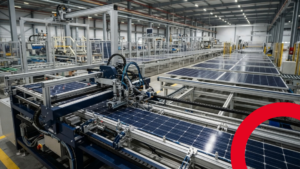
Choosing the right photovoltaic panel manufacturing equipment is one of the most important decisions a solar manufacturer will make. Global demand for solar energy keeps climbing, and photovoltaic module technologies are evolving at an increasingly rapid pace, which puts constant pressure on manufacturers to reduce production costs, improve efficiency and maintain consistently high quality.
The goal today goes beyond manufacturing more modules per hour. A competitive production line must deliver stable quality, efficient use of materials and sustainable operating costs throughout its entire lifetime.
What Makes a Solar Module Production Line High-Performance?
A high-performance photovoltaic module production line balances several factors at once:
- Production capacity and throughput
- Consistent product quality
- Equipment reliability and process repeatability
- Flexibility for different module configurations
- Efficient material handling
- Automation and traceability
- Operating and maintenance costs
Focusing only on the nominal output of individual machines can lead to an unbalanced line. A single piece of equipment may offer an impressive cycle rate, yet overall production capacity remains limited if downstream processes can’t keep pace.
The most competitive line isn’t the one with the fastest individual machine. It’s the one that produces the required quantity of modules consistently, with the expected quality, at a competitive cost.
Key Equipment in a Photovoltaic Module Manufacturing Line
Each stage of the manufacturing process has a direct impact on the final product. Selecting the right technologies, and ensuring the different machines work together efficiently, is essential to building a competitive line.
The Stringer: Precision in Cell Interconnection
The stringer interconnects solar cells to create cell strings, one of the most important processes in photovoltaic module manufacturing. Consistent interconnection quality is essential for the electrical performance and reliability of the finished module, while cells must be handled carefully to minimise the risk of breakage during production.
When selecting stringing equipment, manufacturers should weigh:
- Interconnection technology (soldering, conductive adhesives…)
- Cell and wire handling precision
- Cell breakage rates and manufactured product quality
- Process stability, production capacity and throughput
- Compatibility with current cell technologies
- Adaptability to future cell and module designs
Compatibility with technologies such as TOPCon and back-contact cells, along with the ability to accommodate future developments like perovskite or tandem cells, helps manufacturers protect their investment and respond more easily to changes in the market.
Layup and Module Assembly: Where Accuracy Pays Off
Layup and module assembly is the stage where the different materials and components of the photovoltaic module are positioned and prepared for lamination. Accurate positioning is critical: misalignment of strings or other components can affect the appearance, quality and subsequent processing of the module, and materials must be handled carefully to prevent damage, contamination or unnecessary waste.
Automated layup and assembly solutions improve repeatability and reduce the variability associated with manual operations. Controlling positioning and material handling more consistently allows manufacturers to reduce errors, improve module quality and minimise waste. The right level of automation depends on the required production capacity, product variety and manufacturing strategy, but repeatability and gentle material handling should remain key priorities whatever configuration is chosen.
Lamination: The Heart of the Process
Lamination consolidates the module layers to protect the cells and other internal components, making it one of the most critical stages in photovoltaic module production. A stable, well-controlled lamination process contributes to the durability and long-term reliability of the finished module, and plays an important role in preventing problems related to moisture ingress, insufficient adhesion or delamination.
The laminator must be selected according to module dimensions, required production capacity, process parameters, expected product range and the encapsulant materials to be processed.
Capacity planning matters particularly here: if the lamination process isn’t correctly dimensioned relative to the rest of the line, it can become a production bottleneck. Manufacturers should evaluate cycle times, loading and unloading times, equipment availability and the number of laminators required to achieve the desired output.
Framing and Junction Box Installation
Framing and junction box installation are the finishing stages that follow lamination. These operations require accurate positioning, repeatable application processes and reliable component handling; variations at this stage can lead to additional inspections, manual corrections or rework.
Automating framing and junction box installation brings several benefits: more consistent final product quality, improved repeatability, reduced manual intervention, lower rework requirements and increased productivity. The equipment should also be configurable for the frame dimensions, junction box designs and module formats included in the manufacturer’s product portfolio.
Testing and Quality Control: Catching Deviations Early
Testing equipment verifies the electrical performance, safety and integrity of photovoltaic modules. Typical quality control processes include:
- Electroluminescence inspection
- High-potential testing
- Flash testing
- Visual inspection
- Product identification and traceability
These controls shouldn’t be treated only as a final inspection step. Integrating them throughout the entire line makes it possible to detect deviations in quality or process as early as possible and minimise waste.
Digitalization, MES and Traceability: Turning Data into Decisions
Digitalization means registering and storing all the information generated throughout the line, including equipment status, process parameters, quality controls and raw material batches used.
This data helps manufacturers identify deviations at an earlier stage, spot underperforming areas of the line, or detect defective raw material batches, which makes it possible to take corrective action before problems generate larger quantities of defective products or affect the performance of the complete line.
Why Line Integration Matters More Than Any Single Machine
The performance of a photovoltaic module factory depends on much more than the capabilities of its individual machines. Even highly efficient equipment can fail to deliver the expected results if the production line isn’t correctly integrated. Smooth material flow, balanced station capacities and coordinated control systems are essential for stable production.
Effective line integration should consider:
- material flow between processes
- station balancing
- buffer management
- automation architecture
- production software
- process and product traceability
- data collection and management
- coordination between machines
A well-integrated line allows the different production stages to operate as a single system, reducing interruptions, simplifying production management and giving manufacturers better visibility of their processes.
Integration matters just as much as the performance of each individual machine: the objective should be to optimise the complete manufacturing process, rather than maximise isolated pieces of equipment.
Preparing the Production Line for Future Module Technologies
Photovoltaic technology continues to evolve, and manufacturers must prepare their production line for changes in cell technologies, module formats, materials and production requirements. Current and emerging developments include TOPCon cell technology, heterojunction technology, back contact, perovskites and other tandems, larger cell and module formats, new interconnection concepts, increasing automation requirements, and more demanding traceability and data management needs.
This doesn’t mean every factory must be prepared for every possible technology. It means manufacturers should understand the potential development of their product portfolio and select equipment with an appropriate level of flexibility.
Modular designs, configurable processes and upgrade possibilities help reduce the risk of premature obsolescence. A forward-looking equipment strategy protects the investment and allows the production line to remain competitive for longer.
How Mondragon Assembly Supports Solar Manufacturers
Mondragon Assembly supports photovoltaic manufacturers through its experience in solar module production equipment and complete manufacturing lines, offering turnkey photovoltaic manufacturing solutions, complete process and line integration, equipment adapted to different production capacities, solutions for different module and cell technologies, and global presence combined with local support.
By considering equipment, automation, software, material flow and production requirements as part of a complete system, Mondragon Assembly helps manufacturers develop production lines adapted to their specific objectives. This integrated approach is especially important when planning new factories, expanding existing production capacity or adapting a line to new photovoltaic technologies.
Building a Competitive, Future-Ready Production Line
Choosing the right photovoltaic panel manufacturing equipment directly influences productivity, product quality and manufacturing costs.
Every stage of the process, from cell interconnection and layup to lamination, finishing and testing, contributes to the final performance of the module. Yet the value of the equipment can’t be assessed on a machine-by-machine basis alone. Line integration, process balance, traceability, automation and the ability to adapt to future technologies matter just as much.
By taking a complete and forward-looking approach, photovoltaic manufacturers can protect their investment and build a more competitive production operation.
Are you planning a new photovoltaic module factory or considering an upgrade to your existing production line? Contact Mondragon Assembly to discuss the equipment and line configuration that best fits your manufacturing requirements.