
Why Shredding is no longer sufficient in solar panel recycling
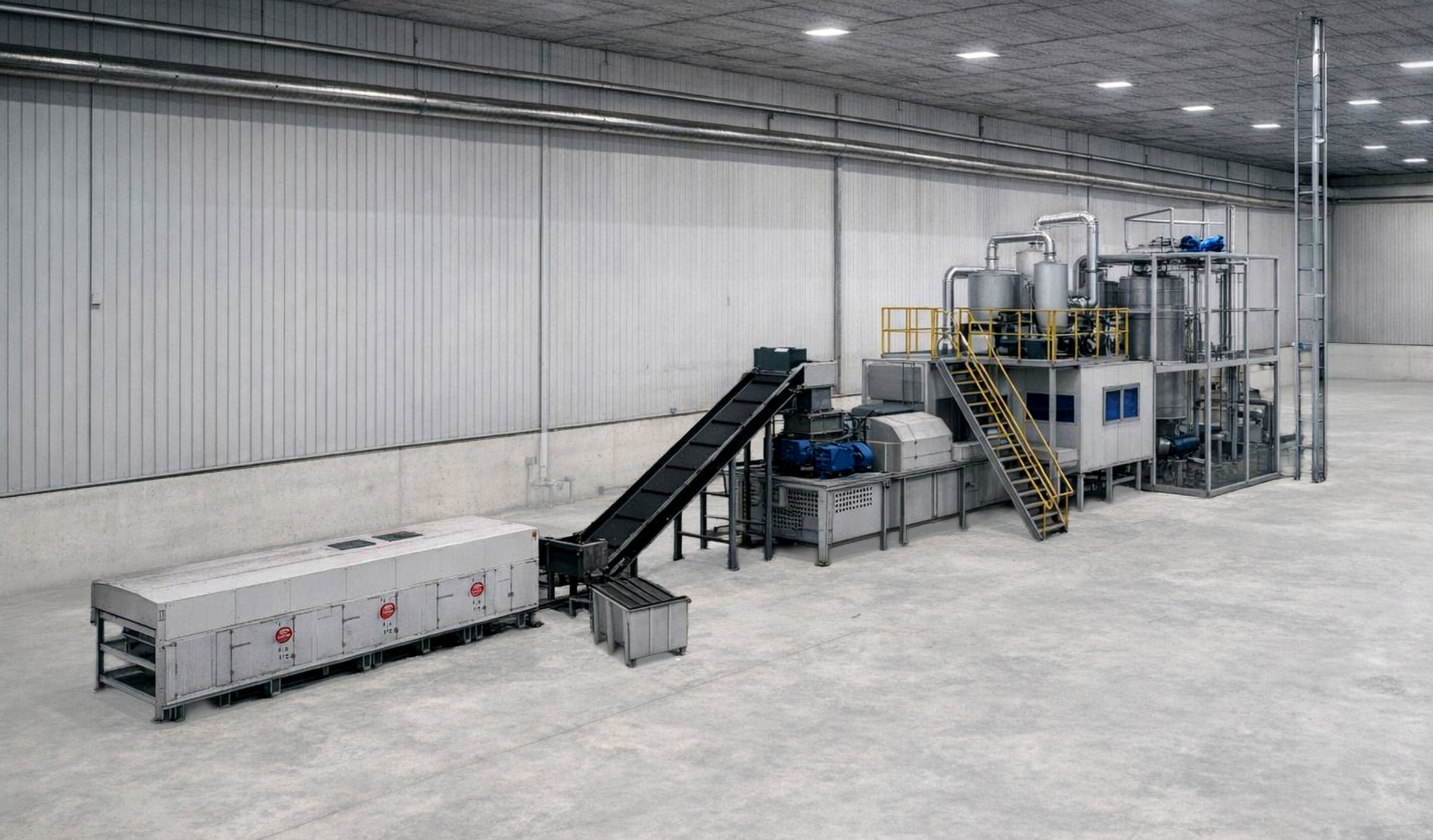
Why Shredding is no longer sufficient in solar panel recycling
The rise of photovoltaic recycling
The recycling of solar panels is experiencing rapid growth, driven by the global expansion of photovoltaic energy and the increasing number of installations reaching the end of their useful life.
This growth is boosting investment and innovation across the entire value chain. In recent years, technological advances have significantly improved material separation, recovery rates, and the purity of recycled materials, particularly for high-value materials such as silver and high-purity silicon.
In this context, the sector is evolving from a waste management approach toward a true circular economy model in solar energy. However, technologies based only on shredding are beginning to fall behind.
This is precisely where Mondragon Assembly adds value, combining advanced automation and process engineering expertise to drive more selective, efficient recycling solutions focused on recovering high-value materials.
The limitations of shredding in photovoltaic recycling
For years, shredding has been the predominant solution in solar panel recycling, mainly due to its simplicity and low implementation cost. However, as the sector has evolved, its limitations have become increasingly evident.
The main problem with these processes is that they generate mixed materials that are difficult to separate, complicating the efficient recovery of high-value components. In practice, this results in:
- Difficulties in recovering critical materials such as silver
- Loss of quality in recycled silicon
- Limited applications in downstream stages
- A significant reduction in the economic value of the process
As a result, companies that rely exclusively on shredding technologies face an increasingly complex scenario: lower profitability, reduced competitiveness, and greater challenges in meeting regulatory and sustainability goals.
All of this is driving a clear transition toward more advanced and selective recycling technologies capable of maximizing value recovery.
Toward more efficient and selective recycling
Photovoltaic recycling is currently in a transition phase. Traditional processes have been effective in diverting waste from landfills and recovering bulk materials such as glass and aluminum. However, they remain insufficient when the goal is to efficiently recover high-value materials.
The sector’s main challenge is the lack of selectivity in current processes, which limits:
- Precise separation of critical materials
- Efficient recovery of silver and silicon
- Value generation in downstream processes
As the volume of panels reaching end-of-life increases, this limitation is no longer occasional but becomes a structural factor affecting the economic viability of recycling.
From Mondragon Assembly’s perspective, this scenario highlights the need to rethink traditional approaches, focusing on solutions that integrate process design, technology, and automation to enhance selectivity and maximize value recovery.
For this reason, the future of solar recycling lies in adopting more advanced solutions based on:
- Selective delamination processes
- Specific treatments tailored to each material
- Technologies designed for the recovery of high-value materials
The role of automation in solar panel recycling
Mondragon Assembly brings a differentiated approach to the photovoltaic recycling sector by combining advanced industrial automation with deep process engineering expertise.
Within this approach, one of the key elements is the integration of selective technologies such as our waterjet solution, which enables precise and controlled separation of panel components without compromising the integrity of high-value materials.
Thanks to this type of technology, it is possible to overcome the limitations of shredding. Specifically, it allows:
- Preservation of the integrity of glass, silver, and silicon
- Improved recovery rates
- Higher quality of recycled materials
- Greater value generation in downstream stages
Moreover, this technology does not operate in isolation but is integrated into complete, optimized recycling lines designed to ensure industrial scalability, reliability, and operational efficiency.
A comprehensive approach: beyond technology
Beyond technological development, Mondragon Assembly’s value lies in its ability to act as a long-term partner, supporting clients throughout all phases of the project.
This support ranges from the initial conceptual definition stages to industrial commissioning and continuous process optimization.
Our approach is built on four key pillars:
- Automation, to ensure quality, efficiency, and repeatability
- Customer adaptation, with solutions tailored to feedstock, capacity, and recovery objectives
- Process engineering, specialized in selective technologies that go beyond shredding
- End-to-end support, from design through operation
Conclusion: towards high-value solar panel recycling
Solar panel recycling is entering a new phase in which profitability and sustainability depend directly on the ability to recover high-value materials.
In this new context, technologies based only on shredding are no longer sufficient.
The combination of selective processes, advanced automation, and innovative solutions such as waterjet technology enables a shift toward more efficient, circular, and future-ready recycling models.